Monday, March 30, 2009

Finding the Art in Anatomy

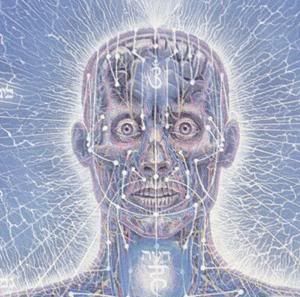
There are many ways to appreciate human anatomy. The complexities of the human nervous system interest me more than any novel ever could. Many artists have seen the art in these systems and translated it to canvas.

Photobucket
Photobucket
Photobucket

Here is a few more Neuroanatomy power points to help explain the art that is the CNS. These deal with the cranial nerves (CN).
CN I - IV
Photobucket
CN V - VII
Photobucket
CN VIII - XII
Photobucket

On a somewhat personal note, my microbiology research is almost finished and I will post it on here as soon as it is finished and published.
Photobucket

Tuesday, March 24, 2009

Chemistry

Of all of the pre-requisites for most graduate medical programs, chemistry is the most time consuming and tedious. The typical chemistry that is required and/or taken for these programs includes:
  1. Principles of Chemistry (not required ever but good for recommended for anyone who has a weak background in chem)
  2. General (Inorganic) Chemistry I
  3. General (Inorganic) Chemistry II
  4. Organic Chemistry I
  5. Organic Chemistry II
  6. Biochemistry I
  7. Biochemistry II
So, lets say one just takes the usual minimum requirement for PA school (GChem I & II and OChem I) that is still 3 semesters meaning an entire year straight of chemistry! If one was to take each one in the Fall and Spring sequence, that is over 3 years of chemistry!

One might look at this and wonder why so much chemistry is required by graduate medical programs. Chemistry is happening all the time in the human body and without a fundamental knowledge of the basic mechanisms of these reactions and all that goes into them, success in upper level Pharmacology, Physiology, etc. is impossible.

There is hope though, with adequate study time and a genuine attempt to enjoy the material one can be successful and send out transcripts to their programs of choice with confidence.

With all of the courses I have mentioned in previous posts, one may be overwhelmed and question their choice of profession. So I have included an Introductory Chemistry course lecture taken from MIT Open Course Ware


And make sure to never forget your handy Periodic Table!


Also, a bit off topic but I just wanted to share this bit of awesomeness.

Photobucket

Monday, March 23, 2009

Research

Finding a field that interests one's self early on in their undergraduate years is important. Although it is good to be a "renaissance man"of sorts and have a vast knowledge of many of the general subjects in science, is is also important to strive to be an expert on one field or subject (e.g. specializations in medicine). When one finds a particular subject that interests them, they should take the time to study that subject frequently so that they may be able to possess a mastery of the subject but also so that they can be up to date on new developments in that area.

Photobucket

I am currently involved in research in the field of Microbiology. I am looking at emergency department room protocol concerning room turn around and more specifically the cleanliness of these rooms after turn around. We have swabbed inanimate objects in these rooms that patients often come in contact with in their brief stays on these units. What we have found so far is what was expected, plates teaming with pathogenic bacteria. This has been a very educational and fun experience for me, as I feel that I will have contributed something to that which has given me so much, science. 

Photobucket

This is where research comes into the picture. Having research experience on one's application can be the deciding factors between them and another student in an ADCOM's decision to fill a seat in a graduate program. But, how does one get involved in research?

First, as I mentioned earlier, find something that is of interest. The long hours and often tedium that is associated with laboratory work in research can often make one question what they are doing there, this is where having a genuine interest and passion in that particular area can serve to help overcome those moments.

Photobucket

Second, go to that particular department. Getting involved in research will include meeting people at that particular department at one's school eventually, so why not go there and introduce one's self and express interest in getting some "hands on" experience by involvement in research.

Third, making sure that one's CV (curriculum vitae) has some indication of education in that particular subject. A position in a research team will almost always involve some sort of application so making sure that one has the "chops" to be a contributing part of a research team is essential to their success in acquiring that position.

Fourth, have fun! Research should be an interesting and education endeavour for a student. Even though it may be tough at times and take some sacrifices (weekends, nights), it will all pay off in the end by greatly contributing to a application and the personal satisfaction involved in making a contribution to science.

Saturday, March 21, 2009

Physician Assistant Programs

There are over 100 Physician Assistant, or "PA" programs today in the United States. Each one with its own mission statement, didactic/clinical focus, and with many differing in the type of degree offered, it can often be overwhelming when choosing the "right program".

One great website is the PAEA (Physician Assistant Education Association). This website offers, among other things, the most comprehensive list of PA programs with highly detailed information on each in one place as I have seen on the web. However, the website requires a one-time membership fee of $35, which is a bit more than others but I have to say it was well worth it as far as research is concerned.

Another good, and more affordable option, is AAPA's (American Academy of Physician Assistants) page. This page shows most of the programs in the country and gives links to their home page.

The degree that is offered is another vital part of deciding which programs one should apply to. Traditionally, PAs were able to practice as long as they had passed the boards (PANCE). However, the "degree creep" is starting to hit the PA profession and many employers are starting to make the masters degree a necessity for hiring. I would recommend this route as being offered by the top schools on one's list and a very highly-ranking deciding factor in school choice so that one is not limited to the positions they are able to take upon graduation.

Photobucket

Thursday, March 19, 2009

Neuroscience

Of all the the aspects and topics in science that I enjoy reading about and researching, Neuroscience (particularly Neuropsychology) is my favorite. Neuroscience is the study of the nervous system. I compare this field of study to that of space, where when one begins to look into the present day knowledge of that field we realize how little we know about it. The mysteries of the brain/mind are one of my favorite topics, the things that we cannot fully explain

Photobucket

One of the "all-stars" of Neuroscience is V.S. Ramachandran MD PhD. Ramachandran is a professor and researcher of Neuroscience at UC. San Diego and has dedicated most of his efforts into researching the anomallies of the mind such as phantom limb syndrome and some extreme cases where his patients believed that one of their limbs was that of somebody else. 

The following is one episode of a two part series on his work that aired on the BBC.


Wednesday, March 18, 2009

Internet Resources

The internet is one of the most valuable resources of information that exist today. One can only imagine what scientific advancements we will make in the coming years now that the relay of information has become a non-issue in terms of speed.

Photobucket

Blogs (like this one) and forums are great sources of information for graduate medical programs. Two of my favorite examples are the pre-PA forum on the Physician Assistant Forum, Uncle Harvey (Neurosurgery forum), and of course the Student Doctor Network. Active participation in a forum can keep you up to date with news that affects health care students and professionals and get a good idea about certain programs one is interested in.

Video is one the best ways to learn new information and familizarize one's self with new concepts via the combination of visual and auditory learning. Even some of the most complex concepts can be explained with video, like the idea of a tenth dimension:

Photobucket

For anybody interested in a career in surgery, videos are the best way to orient one's self to the profession. The National Library of Medicine has a great collection of procedurally categorized videos. OR Live is also great and often has live surgeries broadcasted to the public.

Photobucket

I mean with high definition cameras and high speed internet, who needs to scrub?

Tuesday, March 17, 2009

Cadavers

Cadaveric dissections are a very unique tool in anatomic education. Many are grossed out by the notion of cutting open a dead body but, for those who can tolerate it, cadavers are an essential tool for learning human anatomy. I have had the honor of having hands on experience with cadavers in my internship. I have learned more about human anatomy by cadaveric dissections than I ever learned memorizing bones in my textbook.

That being said, when one comes to a decision between graduate medical programs, the presence of cadavers in the gross anatomy lab should be a factor in their decision. They not only serve as an excellent tool for learning anatomy, but they also can help to desensitize students to the "gross" (double entendre implied) that can often overwhelm health care students in circumstances which involve open wounds, open surgeries, etc. They also help to familiarize the student with some of the basics of surgery such as: dissection of tissue, skeletonizing of vasculature, nerves, muscle, tendon, and manual manipulation of tissue for viewing, suturing, etc.

Here is a great website for cadaveric dissections as a means of learning anatomy:

Photobucket

Sharing the Wealth

I am currently working on getting a ton of information up here. I plan on putting up some of my personal collection of documents, spreadsheets, power points, and pictures that I have picked up along the way during my education. 

I figure, why not share it with you all? I believe education and information should be free and accesible to all so that everybody has the opportunity to use the internet to gain knowledge on anything they want at any time at no cost.

There is of course a much better collection out there, but I will give what I can.

Here is an example of what I am talking about: 

Photobucket

Photobucket
(as usual, click the picture for the link. If you have not noticed already, all of the pictures on here are links)

To give you an idea of how much this will include, those files are some of many that encompass various subjects such as a graduate-level Neuroanatomy course. Hopefully you are as excited as I was when these files were passed on to me (i.e. you are a dork too).

Photobucket


Organic Chemistry

Here is one of my study guides for Organic Chemistry that is an overview of Reaction Mechanisms and Alkenes. I hope these will help anybody who needs them. I am a strong believer in sharing in the wealth especially when that wealth is knowledge. I will also begin to scan some of my more detailed notes like these and post them periodically for your files and/or reference. 

Enjoy!

Photobucket
Photobucket
Photobucket

Monday, March 16, 2009

Studying

In between attending class, eating, and sleeping comes studying. Anybody who has made it as far as to be seriously considering a graduate level education obviously knows the basics of how to study but perhaps never learned how to study specific subjects.


In Anatomy, Mnemonics can become your best friend. The nature of the subject includes several long sequences of otherwise arbetrary words to the new student. This can be very overwhelming but there is a way to remember large sequences of words in order!

The classic example of a long sequence of words are the Cranial Nerves, all 12 of them. Here is one of my study guides:

Photobucket

Organic Chemistry is one of the definitive "make or break" classes in the pre-med/pre-allied health curriculum. This class, at least for 99% of students, cannot be passed with an A or even a B without a strict regiment of studying. This is class where memorization (with the exception of functional groups) can lead to the detriment of one's grade. One of the only ways to learn Organic is to constantly run through problems. This can include about 30-60 minutes per day of problems and homework.

Photobucket

However, if I was to pass on any advice on this course in particular, I would recommend purchasing a copy of this book prior to starting Organic Chemistry I.

Photobucket


These are two different ways in which a student must learn to be successful in the variety of courses that are thrown at them in their undergraduate years.

Books

Books are an integral and often very expensive part of any student's education. They serve as a method of relaying information in a pre-set format to the student. Textbooks can be very pricey and you may wonder why they charge so much. A bit of advice that I would pass on to anybody would be to use half.com to purchase and sell textbooks so that we, as students, can take the monopoly out of the hands of our campus bookstores and spread the wealth amongst those who need it...the students!

In this post I will pass on a few of the books which have served me well in my years as a pre-health sciences student. These are primarily books about M.D.s in their surgical residencies/internships/attending years but they give great accounts of the initial immersion into the often chaotic and confusing sea of medicine. There are many books out there that one can read to prepare for a career in medicine and/or to get an idea of the daily life of a medical professional but these are my personal favorites.

Each book will include a link for purchase at half.com because I believe books should be cheap and accessible to all. (Note: I am not selling any of my books, I like to keep them so this isn't a scam to sell my things.)

The House of God, by Samuel Shem M.D.

Photobucket

The House of God is my personal favorite in the realm of medical books. This is an account of one man's Internal Medicine internship in the "House of God" better known as Beth-Israel Hospital Boston, MA (the Harvard Medical School teaching hospital). This is the most comical of the books I will share in this post and a great read.


Photobucket

Photobucket

Both of these books by Atul Gawande should be read back to back but in no particular order. These books look at the good and bad sides of medicine and where mistakes happen in between. Being a scholar in public health, Gawande analyzes medicine with a macro-level approach to examine the things that have failed in medicine. These two books are great reads and given a very outside>in approach and seem to me to be a manifesto of a man who wants to be Surgeon-General...

When the Air Hits Your Brain, by Frank Vertosick M.D.

Photobucket

This is my second favorite of the medical books because it involves my medical passion, Neurosurgery. This book is more of a straight-forward look at the practice with little about the author's personal life (unlike the next book) and more about the molding of a Neurosurgeon and the trials and tribulations that come along with it. I would recommend this book to anyone looking to pursue a career in Neuro.

Hot Lights, Cold Steel, by Michael J. Collins M.D.

Photobucket

 "Hot Lights" is a great example of a surgical-residency story told through the eyes of the one living through it. Collins gives his account of the Orthopedic Surgery residency process at the Mayo Clinic in Minnesota. He gets through this time while attempting to raise his ever-growing family (which ends up being 12 children!) by working through sleep moonlighting at an ER then driving his quickly deteriorating care back 50 miles to do a 36 hr. shift at Mayo. This man is a true testament of perseverance through passion for your craft. Great read with tons of info on his personal life through the whole experience.

Last but not least, the Bible of human anatomy:

Atlas of Human Anatomy, by Frank H. Netter M.D.

Photobucket

The "Atlas" is in my personal opinion, the best anatomy book out there and it is full of beautifully detailed pictures of all aspects of human anatomy. This is a must have for any student looking to pursue graduate level medical education.

Enjoy!

Sunday, March 15, 2009

Job Shadowing

Another important aspect of getting experience in health care is Job Shadowing. One can "shadow" a professional in their field of interest to gain insight on the day-to-day of a medical professional.

My personal experience in shadowing comes from three sources.

My first experience mentioned in my previous post was in shadowing the medical director of the psych unit where I worked who was an M.D. Psychiatrist. I shadowed him more than once a month for about a year where I would start early in the morning (usually around 0630, this is usual so get a good night's sleep and tall cup of coffee!) and go with him on morning rounds on his patients then would go to consults throughout the day. After a while I was allowed to go off on my own and take a History and Physical or H&P to the best of my abilities to both shorten his day and also to get valuable experience in practicing one of the most essential elements of professional medicine. This took time and trust from my attending physician (attending as in the physician in which I was shadowing) to get to that point but I actually got to a point where I learned to formulate a diagnoses or at least get a good idea as to what was going on with the patient.

My second experience was with a PA in Internal Medicine who then on my second shadowing was working in Transplant Medicine. The reason for the switch I will not go into but this is one of the great perks of being a PA, being able to switch specialities at will without any extra training or fellowships! This entailed much of the first experience but since it was only twice I was not able to go out and collect H&Ps. This, however, was great because I saw the more medical aspect of health care and saw everything from her telling a patient they were having a hearth attack to her catching some essential labs and switching meds in time to save a patient's life! This experience also includes one of my first experiences in the Operating Room.

The transplant surgeons the PA worked for are some of the best in the country and I had the honor to observe a 9 hour (yes 9 hour, wear comfy shoes, I will get to that later) liver transplant. The patient was prepped in the OR in time for the surgeon to fly in on a helicopter with a cooler containing the liver. The surgeon changed in the locker room while the other surgeon prepared the liver for transplantation and then scrubbed in time to begin the process. The time flew by as I constantly switched position to alleviate pressure from my tiring feet but at the same time fixed on the operation. This was one of the those affirming moments in my journey that made me so sure of a career in surgery that I could not see any other career path being tangible.

My third experience was also surgery focused, with a Orthopedic Surgery PA. I met the PA while I was interning at a Robotic Surgery/Cadaver Surgical Skills lab (I will talk about in a future post) 

The following is a video of me practicing with the DaVinci Surgical Robot during my Internship.

and asked about shadowing to which he replied "of course, I wish I had someone to shadow when I was in your position!". I shadowed him on my spring break just a few weeks ago (no rest for weary!) where I watched over 15 ortho operations under the guidance of an extremely talented orthopedic surgeon. This was my first experience "scrubbed in" on a surgery so I was very nervous but did just fine keeping my hands folded above my waist and below my chest and out of the way but still staying in the "sterile field" (two essentials to scrubbed observation in the OR). The days were long, typically from 0630 to around 1900 (I use military time because this is the norm in the hospital) but time flew by because I was so interested in the whole experience and loved seeing the techniques and devices being used in the operations.

So, how does one get a shadowing opportunity? The best way is to first get HCE in the hospital setting. Once in that setting you will be immersed in a sea of health care professionals who will or will not have time/care to talk to you. The key is to be forward but respectful of their time while still keeping a sense of enthusiasm when asking about a shadowing opportunity. Give them your email address and mobile # and get theirs and try to adhere to their schedule as best as possible (remember they are doing this on their own time!) but dont push it, some people just dont have time to have you shadow and you should be respectful of this. Dont let failed attempts derail your inquiry though, keep fishing and you will get a bite!

So when you get the shadowing appointment, what do you bring and how can you prepare?
First, read up on the specialty in which the person specializes in and get a good overview of the anatomy and pathophysiology of that specialty so that you can not only know whats going on but also be able to answer any pop quizzes that they may have for you throughout the day.
Second, bring comfortable shoes and socks! This is essential most of all in the OR but in any medical professional shadowing experience as you will most likely be spending > 80% of your time on your feet throughout the day. I wear/prefer Dankos
Photobucket
Third, email/call/text the attending what you should wear that day. This could be scrubs only, scrubs and a lab coat or "professional attire". If the attending does not say what to wear, you should wear professional attire (such as dress shirt, tie, and khakis, or the equivalent for a female) and if there is possibility of being in the OR bring your own scrubs (even though most of the time there will be scrubs on location for you to wear).
Fourth, Bring a small notebook to carry in your pocket and a pen. You should take notes throughout he day for your own personal reference for later questions but also so that you show interest and have something to take home with you. 
Fifth, bring a cell phone but leave it on silent! There is nothing worse than your ringtone blaring when a patient is talking about their inoperable malignant brain tumor!
Sixth, bring some cash for lunch but also have a power bar or granola bar in your pocket. Meals can be easily "forgotten" on busy days making rounds so have something to take care of those stomach growls!
Seventh, if there is a possibility that you will be going into the OR do a quick refresher/crash course on scrubbing and sterile technique.

Photobucket

Most of all, Have Fun!!!!!
Health Care Experience

One of the most imporant aspects of a graduate medical program applicant's resume is Health Care Experience or HCE.

My personal HCE lies primarily in my three years and counting experience as a psych-tech on a medical psychiatrics unit in the Florida Hospital system. Three years ago I was finishing up my senior year at UCF in Psychology and looking for a job that was more applicable to the field in which I was studying. At that point I had many ideas as to what I wanted to do but no definitive choices or decisions. A friend of mine was working at the aforementioned "psych ward" and said they were hiring so I decided to give it a shot.

Upon walking onto the unit for my interview, I was sexually harassed physically and verbally by a patient walking by and immediately thought to myself "what the hell am I doing here?" The interview went well and I was offered the job which I took but not without any reservation.

The first couple weeks were scary but I learned more about interacting with not just psychiatric patients but people in those weeks that I ever had before in my life. This unit was designed for psychiatric patients who also had significant medical diagnoses so I saw both sides of the equation for these patients. It was during the first month that I knew that healthcare was where I wanted to spend the rest of my professional life. 

Psychiatrics is a different world altogether, you can be having a casual (this being a VERY relative term on the psych ward) conversation with a patient one minute then having to "take them down" the next to save yourself and most importantly, them. Psychiatrics is not without sad and depressing moments where you think that some will never be cured but it is definetely rewarding work.

It is through this experience that I have been given some of my best opportunities in health care experience, the medical director of the unit gave me the opportunity to shadow him on rounds (he is an M.D. Psychiatrist) for over 100 hours where I learned (somewhat) how to diagnose just by speaking to patient, which is one of the coolest parts of psychiatry.

Now, how does one get Health Care Experience?? There are several ways, but in my opinion the hospital is the best setting to be immersed in medicine to the fullest and to get your hands wet in many different aspects of the health care world, but how does one get into the hospital?

The obvious answer is a job, this leads me to two different entry-level options: patient transport and patient care tech.

Patient transport is a great way to see the hospital as a whole and to meet people throughout the hospital and the greatest advantage is that you can shake hands with nurse managers that can eventually hire you as a Patient Care Tech or PCT which takes me to the next job...

The PCT takes care of patients and assists the patients in the Activities of Daily Living or ADLs. They also are an assistant to the nurses and physicians and help them by taking care of many menial to significant tasks throughout the day that can include everything from bed baths, butt wiping (thats right, code browns), and speaking to patients about their problems and helping to absolve them.

Photobucket

Patient transport is a great means to an end in my opinion for those who are considering a graduate medical program. I say this because though it does involve patient interaction, it does not compare to the experience of a PCT or EMT (Emergency Medical Technician which is awesome HCE but requires a lengthy licensure process) in terms of that which is significant to an admissions committee or ADCOM.

The Graduate Records Examination or GRE

Ah, the dreaded GRE...

As mentioned in the previous post, the "pre-allied health" student has a heavy load of courses to take to prepare for a graduate medical program. On top of this, they must take the dreaded GRE.

The GRE is basically an SAT for graduate school that is designed in one of two ways: As a general test which very much adheres to my previous analogy as a "grad-school SAT", and the specific GRE which can be focused in categories such as Biology or Psychology.

Most graduate allied health students take the general GRE

Scores on the GRE are not everything in applying for grad school, however they can help or hinder quite a bit depending on scores.

In preparing for the GRE, I picked up the obligatory GRE study guides on the shelf at Barnes and Noble made by Kaplan, Princeton Review, etc. and studied for a few days for it to begin collecting dust on my bookshelf.

Photobucket

Not having set a date for my test, I had little motivation to really begin studying beyond memorizing some of the ridiculous vocab and refreshing myself on fractions (thats right, fractions) that is before I signed up for the the "Princeton Review".

The Princeton Review GRE Study Course got me on track and really helped me find time to dedicate studying the right things between a packed schedule of work and school. Even though the price was a bit steep (around $1,110) it boosted my pre-test scores up about 300 points and on the final test about 400 points. This is quite a bit considering the test is based on a 1600 point system!

As for advice I would give beyond that for any student looking to take the general GRE, study the vocab!! The verbal part is the most notorious for pulling down otherwise great scores. The math section is basically advanced algebra with minimal statistics and calculus. The writing is pretty easy but I would suggest writing a few of the essays given in the prep. books.

Also, I cannot stress this enough, the weeks before the test find time to take pre-tests (online preferably since the test is computer based) with a timer to condition yourself on working within a time limit!! This can make or break a test taker!

Otherwise, Good Luck!!!

The Courses

pre-med coursework encompasses a bulk of classes that prepare the undergraduate student for a career in health sciences. The traditional "pre-med" student is one who wishes to attend an M.D. or D.O program, however this term also can encompass students looking to become a PA, CFA, PT, OT, Dentist, and/or a PhD in a myriad of medical sciences.

One who is pre-med has made a decision to adhere to a strict schedule of didactics that includes Biology, Chemistry, Physics, etc..

I was taking the traditional Pre-PA courseload for the last two years. Here is an abbreviated look at a semester-by-semester courseload. (This includes some of the UCF classes I took for my Psych degree that were applicable to PA)

Semester 1:
  • Anatomy and Physiology I with Lab
  • College Algebra
  • Psychological Aspects of Drugs
  • Research Methods
  • Abnormal Psychology
Semester 2:
  • Anatomy and Physiology II with Lab
  • Survey of Physics with Lab
  • Principles of Microbiology with Lab
  • General Chemistry I with Lab
  • Physiological Psychology
  • Statistical Methods
Semester 3:
  • General Biology I with Lab
  • General Microbiology with Lab
  • Medical Terminology
  • General Chemistry II with lab
  • Abnormal Psychology
Semester 4:
  • General Biology II with Lab
  • Organic Chemistry I with Lab
  • Pathophysiology
  • Clinical Psychology
  • Psychopharmacology

These courses given a very abbreviated look at the courses that I have taken that prepared me best for graduate school. These would encompass the bread-and-butter of a Psychology/Health Sciences or Biology double major situation for any of those who would be interested in that track.

Photobucket


My Road to the OR

Hello, I am Chase Allen and this is the first post of many that will document my journey to the Operating Room or the "OR".

I am a student in Orlando, FL (right now, however this will soon change) with a Bachelors from UCF in Psychology and now finishing up my pre-med coursework at Florida Hospital College of Health Sciences.

I applied to many schools and I will be starting Eastern Virginia Medical School (EVMS) in June of this year to begin my journey into becoming a Physician Assistant (PA-C) certified in Surgical First Assisting (CFA)

The next two years for me will be done in the Graduate Surgical First Assisting program at EVMS then the next two years after that will be in a PA program to finish off my education into becoming a PA-C CFA.

In the last year or so in applying to PA schools I have engrossed myself in pretty much all of the literature available on the internet for pre-PA and pre-CFA students and found plenty of great forums and websites that are full of information for those who are in the same position as myself. However, there was a great lack of blogs that gave a detailed account of a personal experience of the entire process. That is why I am starting this blog today, to give all that will come after me an idea of the sacrifices and rewards that will undoubtedly fill the next years for me.

I hope this serves you, the reader, well and I hope nothing but the best for all of you out there trying to make it.

I am 24 years old and have a wonderful girlfriend whom I love very much and will be leaving for a year in June as she too is in a medical program and has one year left before she is an official Dental Hygienist. This is the biggest sacrifice that I will be making among many but I believe that it will all pay off in the years to come.

I hope to look back at this first in a few years, tired from a long day in the OR and smile knowing that it was all worth it.

So I invite you all to come along with me and share my experiences in...
Photobucket